Showing posts with label Criterion Collection. Show all posts

Tuesday, March 29, 2011

MOVIE REVIEW: Amarcord (1973)

Once again, the Criterion Collection offers me something I've been meaning to see for years but never gotten around to it: Federico Fellini's Amarcord an Italian slang-term of some sort meaning "I remember", the film is supposed to be a semi-autobiographical account of Fellini's life as a child growing up in facist Italy. Filled with numerous moments of fantastic imagery, some wacky characters, and a heartfelt pastoral atmosphere, Amarcord is a very interesting look at the genius of Fellini and how he brings his ideas to life on the screen. Rather than superfluously elaborate on the different vignettes in the film, I will say that one must experience it for themselves, as the somewhat nonexistant story lends itself to personal interpretation.

As my first foray into Fellini's work, I must say, I was quite pleased. The lack of a linear story peturbed me a bit, at first, but I got used to it, and eventually became intrigued at Amacord for its interesting visuals and the often hysterical performances. There's several funny moments involving coming-of-age where the boys of the village are sent to the church to confess their carnal sins. They also play great pranks on their teachers, and one of them has an ironic encounter with a buxom tobbaconist. At the heart of the film, is a story about family, patriotism, and appreciation of life in Italy that must be something I will never be cognizant of. But in Amarcord, Fellini does a wonderful job of sharing that love of his country with this love letter to his homeland. If the dictionary put films underneath it's definitions, one would find Amarcord under "pleasant".

8/10

Peace,
- Jon

Friday, March 18, 2011

TRIPLE FEATURE MOVIE REVIEW: Grey Gardens (1976)/The Beales of Grey Gardens (2006)/Grey Gardens (2009)

Every family has crazy relatives, even Jackie Kennedy. In the early 1970s, her aunt and cousin; mother and daughter, Edith and Edie Bouvier-Beale came under fire from sanitation authorities and the tabloids for the decrepit state of their estate, Grey Gardens. After Kennedy saved them, via the almighty dollar from eviction, a pair of documentarians known as Albert and Charlie Maysles decided to film a documentary about the eccentric pair's reclusive lives. That documentary, Grey Gardens became a cult hit, and spawned a broadway musical, and a biographical telefilm.

Grey Gardens is particularly interesting, because it makes one wonder "How did two people go from having everything, to living in almost perpetual squalor?" through the camera lens, we are treated to a day in the life of "Big" and "Little" Edith Beale. Little Edie is a dynamic spinster who parades the house doing song and dance routines while showing off her bizarrely stylistic fashion choices and elaborating upon her family history. Her mother, an uber-liberal with a feisty wit, is a matriarch in every sense of the word. Still spry in spirit, Big Edie manages to enchant with her humor and tales of her family history. While the Beales living conditions are atrocious and appalling, their personalities exude through, and make the film fascinating as a non-fiction piece.

The Beales of Grey Gardens is a companion piece to the first film, made from unused footage from the first cut of Grey Gardens. The Beales is interesting for those who wanted to know more about the family, but it's very much a fan-service and suffers from a lack of cohesiveness in comparison to Grey Gardens. I much preferred the TV film Grey Gardens as a companion piece, because it chronocles the early lives of the Beales and is a very apt dramatization, supported by some wonderful performances by Drew Barrymore, Jessica Lange, and even a memorable cameo by Jeanne Tripplehorn as Jackie O, herself. While it doesn't exactly break the mold in biopic filmaking, it's very entertaining, especially if you aren't familiar with the original film itself. All in all, the story of the Beales is one of a kind, and the original documentary does a fascinating service of portraying their lives

Grey Gardens (1975) - 8/10

The Beales of Grey Gardens - 6/10

Grey Gardens (2009) - 7/10

Peace,
- Jon

Saturday, February 12, 2011

MOVIE REVIEW: Antichrist (2009)

Hello friends! Sorry it's been awhile, but between work and training for my new promotion to Pharmacy Technician, real life has been catching up to me a lot faster than usual (and leaving me with less leisure time). So I'll be doing my best to catch up on my writing this week, now that I have a little bit more "me" time.

About a week ago, I watched this offering from Lars Von Trier and the Criterion Collection: Antichrist, and I will say, despite two scenes of disturbing footage, the film is probably the most disgusting thing I've ever seen since Salò, or the 120 Days of Sodom. Antichrist is a harrowing tale about a bereaved couple who retreat to a getaway cabin in the woods after the accidental death of their son. What they begin to experience, aside from the wife's depression-induced hysterics, involve a series of unsettling visions that suggest the woods is haunted by some mysterious force that threatens to consume the unsuspecting couple in their wake.

Antichrist sounded interesting to me on paper, but the execution of it was not entirely to my liking. After a very provocative silent black-and-white opening with the son's death punctuated by graphic depictions of sexual intercourse, the film takes a slow, quiet course that's periodically interrupted by an argument, or a sex scene, and later on, disturbing acts of violence. It goes without saying, I was bored with the gaunt, nihilistic approach to drama. Charlotte Gainsbourg is just depressed and crazy throughout, and Willem Dafoe seems tired and stoic. For the film's first hour and thirty minutes, the only thing that kept my attention were the occasional vision, punctuated by dark, fantastical imagery.

But here's where things really hit the fan, by making me gag and sending my libido into an all-time low. The following description is rather graphic, so I'll let you highlight the rest. To save any of you from the trouble of enduring such disgusting scenes I'll just point out - there's a moment where Gainsbourg, enraged at her husband, takes a 2x4 to his testicles and masturbates him to the point where he ejaculates blood. She later on, severs her own clitoris with a pair of scissors at the apex of her madness. I swear, I am not making any of this up. For these scenes alone, the film has done really nothing to make an impression other than physically nauseate me with disturbing imagery. While I can't deny it's artistic qualities, the tepidness of the story and the violence are enough for me to deny a recommendation for Antichrist, unless you're into these kinds of works.

4/10

Peace,
- Jon

Wednesday, February 2, 2011

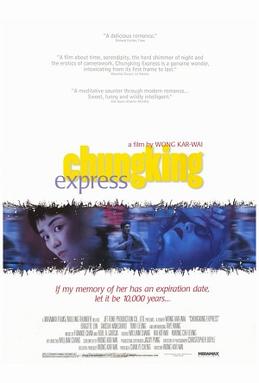
MOVIE REVIEW: Chungking Express (1994)

Another gem from the Criterion Collection that was endorsed heavily by director Quentin Tarantino finds it's way to the US again: from the whimsical mind of Wong Kar-Wai from Hong Kong. Chungking Express is a quirky romantic comedy with some mystery elements that's unlike anything you may be expecting from the genre. I certainly didn't, as I viewed this film too casually upon first glance and lost a lot of the film's meaning from my lack of engrossment. Upon second glance at the recommendation of a friend, I watched Express with a more discerning eye and found myself much more enlightened. Although, I still believe it's a film that cannot be taken lightly for its story.

Set in Hong Kong, 1994, Express weaves two stories of two different couples together with their own, unique personalities. The first act tells the tale of He Qiwu, a jilted cop with a penchant for canned pineapples bearing an expiration date of May 1st - the pending day he chooses to move on from his ex-love. He falls for a shady femme fatale who somehow re-ignites his fire, amidst her illicit dealings. "Act II" begins as He Qiwu brushes by Faye, a tomboyish snack bar attendant who falls for an unnamed cop (who is also going for the rebound). When the cop accidentally leaves his ex's set of keys to his apartment in Faye's possession, she makes an odd habit of breaking into his home and subtly improving his lifestyle. The hijinks that follow from these events are what make the heart of this film.

In an interview with Wong Kar-Wai on the DVD, he reveals his belief that his style is far more influenced by Eastern cinema than Western cinema, contrary to what he thinks many critics believe. I must've been greatly fooled, because watching Chungking Express, in spite of it's Asian setting and culture, something about the photography and script felt broadly European to me - the poetic dialogue, at times, bears shades of Truffaut. The camerawork has the enigmatic mood like that of Wim Wenders - I may sound crazy, but the stunning nature of these elements simply flooded me, involuntarily, with these memories. The editing is without a doubt Asian to the core - quick cuts and an almost improvised feel to much of the action. The film's style is definitely in a class of it's own.

Now, here's the tricky part: With such splendor, it often becomes a challenge to focus on the story. Hence why I'm convinced despite my botched first-viewing, that Chungking Express demands multiple viewings, if the story is too much to take in. This is not your average romatic comedy. Express conveys more in its images through the characters' inner feelings rather than through displayed emotions. Moreover, it's also rather cerebral. The dialogue and action need to be approached with an open mind, in order to reach those conclusions of rationalization that we the audience are always desperately seeking in our films. I will say though, I'm glad I gave Chungking Express another chance, and I was surprised at how much I missed from seeing it the first time around.

8/10

Peace,
- Jon

Wednesday, January 19, 2011

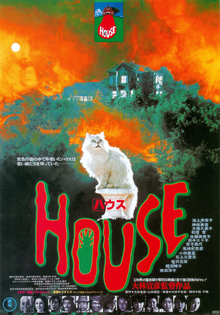
MOVIE REVIEW: House (1977)


There's this well-known home video label in the US, known as The Criterion Collection; famous for putting out carefully selected independent, foreign, and culturally significant cinema. Every so often, one of my cinematically-inclined friends will persuade me to rent one of their products out of specific interest. Luckily, some insightful (and loaded!) patron supplies my local library with nearly every Criterion Collection DVD out there, so obtaining them usually isn't a problem for me. Especially when the rest of the population has to obtain these DVDs or Blu-Rays by either NetFlix or forking over the lump sum and praying it's a movie they'll not regret buying. The DVDs/Blu-Rays are intentionally expensive, due to processing costs (for more info, click the link to the Criterion site).

Needless to say, when I found out from one of my friends that Criterion put out a crazy, cult, Japanese horror film named House, whose box describes itself as "An episode of "Scooby Doo" meets Mario Bava", I had to check it out. Even with Criterion's pedigree, it didn't surprise me that they released something like this, especially when they had the balls to release the S&M torture-porn "masterpiece" Salò, or the 120 Days of Sodom (the thought of seeing it again still makes me shudder). The end result with House is some wacky fun that may turn off serious horror fans, but will definitely please anybody else who enjoys a good helping of "WTF?!" in their film.

House is about a girl named Gorgeous who takes her six female friends to visit her ailing aunt, for the summer, at her lush, cabin in the woods (already, you can see where this is going!). If you ever wanted to know where the stereotype for cute, sailor-clad, Japanese girls with machine-gun laughter came from, you need look no further than House, since the film promulgates it to no end! The seven girls themselves are a vague parable for the "Seven Dwarves" or the "Seven Deadly Sins", each with their own unique personality or talent (my favorite was the girl named Kung-Fu, for obvious reasons!). Upon reaching auntie's house, strange things start happening when a watermelon turns into a disembodied head and tries to bite a girl on her rear, or when the guest-room mattresses start to gang up and try to suffocate another. This is only the beginning, as the gags start to get more violent and weird. But boy, is it entertaining!

The director, seems to set us up for what would seem like an ordinary haunted-house movie with a gaggle of giggling teenage girls. Only unlike many films of House's time, these girls aren't getting drunk, horny, and naked (...okay, one of them does take a bath), they're simply hanging out, making dinner, and being all domestic until strange things start happening. This film isn't meant to be exploitation or straight-up horror, rather a stylized, 88 minute-long dream sequence with a really annoying theme song (It's no surprise either, that the director used to do music videos). As someone who enjoys crazy movies like Dead Alive or Airplane!, I felt right at home with House (no pun intended!). Although the film's bizarre nature can be a little grating at times, and the fact that I felt the ending dragged itself out a bit, House is a must-see for all fans of general comedy-horror.

8/10

Peace,
- Jon